The most inefficient part of content creation is not recording the video; it is the hours spent afterward, scrubbing through a 60-minute stream or podcast to find the 60-second clip that will actually perform. This is manual labor with a low hit rate. Opus Clip is an AI utility that automates this mining process. You upload a long-form video, and its AI analyzes the content to identify and extract multiple short, self-contained clips with high viral potential—complete with auto-generated captions, suitable aspect ratios, and even suggested hooks. It turns a single piece of content into a ready-to-publish short-form portfolio with one click.
This is a leverage multiplier, not an editing tool. A creator's primary asset is their unique insight and personality captured in long-form dialogue. Their primary output for growth, however, is often short-form video. The disconnect between these two states is a massive time sink. Opus Clip bridges it by acting as a hyper-efficient prospector. Instead of you watching the entire raw footage, its AI scans for key markers: spikes in vocal energy, laughter, visually dynamic moments, and semantic cues indicating a punchline, revelation, or debate. It is pattern recognition applied to entertainment value.
Think of your long-form video as an uncut gemstone. Manually finding the best facets is slow and requires a trained eye. Opus Clip is an automated gem-cutting machine programmed with the precise angles (clip formulas) that refract light best on platforms like TikTok, Reels, and Shorts. It doesn't create new value; it extracts the maximum existing value from your raw material. The economic argument is clear: if manual clipping takes 3 hours per long video, and Opus Clip does an 80% effective job in 10 minutes, you have reclaimed 2 hours and 50 minutes per project. Scale that across a weekly publishing schedule.
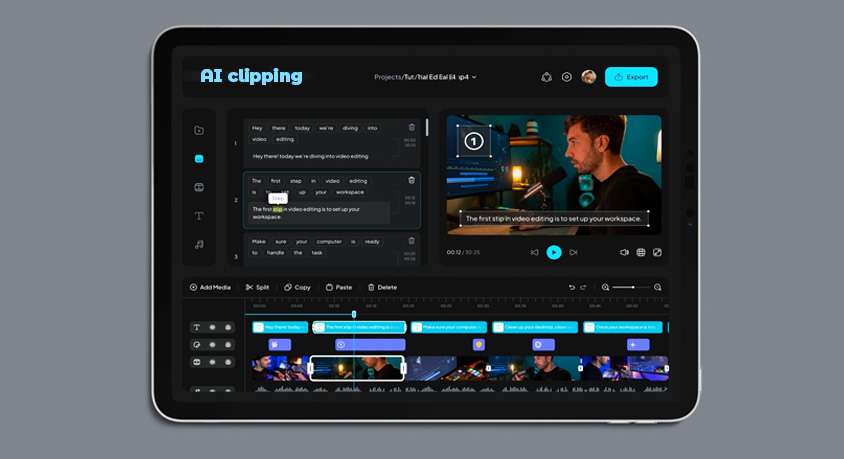
The practical application follows a three-step production line. Step 1: Raw Input. Record your long-form content (interview, podcast, tutorial) as you normally would, focusing solely on quality conversation, not on crafting "clip moments." Step 2: AI Processing. Upload the video to Opus Clip. Let the AI analyze and generate 8-12 clip options. Step 3: Curate and Publish. Your job is now editorial, not mechanical. Scan the AI's selections. Approve the 3-5 strongest clips. Make minor tweaks to the auto-generated captions if needed. Schedule them across your platforms. This process inverts the workflow: you create one primary asset, and the tool systematically manufactures the derivative assets that drive algorithm discovery.
This tool's effectiveness rests on a critical strategic shift: decoupling creation from distribution. You are freed to create in the format most natural to the core idea (a long conversation), while the AI handles the optimization for the distribution channels (short, punchy clips). This prevents the common creator trap of distorting a long-form idea to force-fit short-form trends from the start.
However, it is not a creativity replacement. The AI identifies potential based on structure and energy; your final judgment is required to select clips that best align with your brand and message narrative. The tool provides quantity and a strong first draft; you provide the final quality control and strategic sequencing.
To implement, take your most recent long-form video and run it through Opus Clip's free trial. Compare the clips it selects to the ones you would have manually chosen. Evaluate the time difference in reaching a publishable set of shorts. If the AI's output is even 70% as good as yours but 10x faster, the efficiency gain is undeniable. Stop being an editor. Start being a producer. Your role is to create the raw ore and approve the refined products, not to mine and cut every stone yourself.