Email is not a productivity tool; it is an unregulated request queue that you manage manually. The goal of "Inbox Zero" is often misapplied—it should mean "obligation zero," not simply an empty folder. Shortwave is an email client engineered around this principle. It transforms your Gmail inbox into a streamlined, chat-like interface and uses integrated AI to automatically summarize long threads and generate context-aware, one-tap replies. The objective is to reduce the time between receiving a message and resolving its intent to seconds.
The standard email workflow is a series of micro-tasks: open, read, comprehend, formulate, type, review, send. For a professional receiving hundreds of messages, this process can consume 2-3 hours daily. Shortwave compresses "comprehend" and "formulate." Its AI scans incoming emails and provides a one-line summary above the thread. For many messages, this summary is all you need. For replies, it offers 2-3 short, professional response options based on the email's content. Your job shifts from author to editor, approving or tweaking pre-drafted text. This cuts the cognitive and time cost per email by an estimated 60-80%.
Think of your current inbox as a stack of paperwork, each requiring a handwritten note. Shortwave converts that stack into a stream of text messages, where the key information is highlighted, and your most common responses are available as quick-reaction emojis. The underlying AI is not generating poetry; it is performing a specific, high-volume task: pattern recognition and templated response generation. It identifies the intent ("request for meeting," "status update needed," "simple question") and matches it to an appropriate, brief reply you can send with a click. It turns composition into selection.
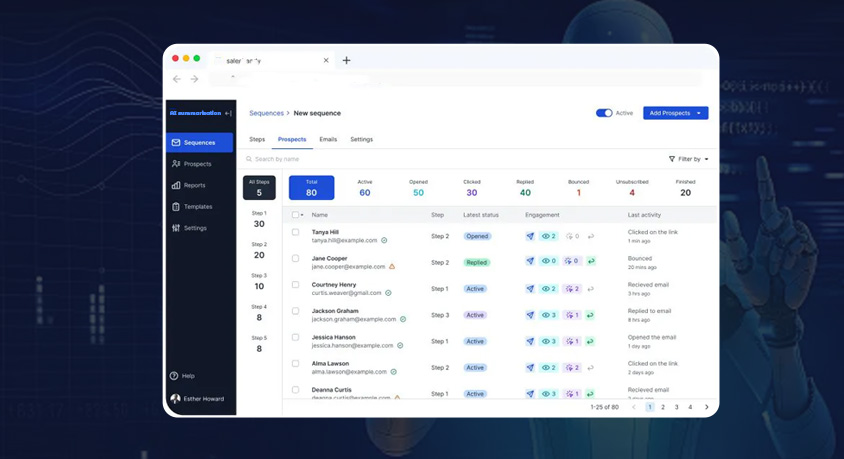
The efficiency gain is not merely in speed, but in decision fatigue reduction. Every email no longer requires a fresh cognitive build. You triage visually via summaries, then dispatch with pre-built responses. This allows you to clear batches of administrative email in minutes, preserving your focus for the few complex messages that genuinely require your craft and judgment. The tool effectively filters your workload, automating the predictable so you can focus on the exceptional.
Implementation requires a deliberate shift in habit. First, migrate your primary Gmail account to Shortwave. Second, spend a week using it passively, allowing the AI to learn your communication style and the types of emails you receive. Third, actively begin using the summaries to triage and the quick replies to respond. Archive or delete immediately upon replying. Fourth, configure its "Bundles" feature to automatically group low-priority emails (like newsletters) away from your primary view, treating them like a separate, lower-urgency inbox.
This approach renders the old "Inbox Zero" chase obsolete. The goal is no longer to see an empty inbox, but to have a processed inbox—where every item has been resolved, delegated, or scheduled in the minimal time possible. Your metric shifts from "emails handled" to "time spent handling email." Shortwave aims to drive that time toward zero for routine communication.
To evaluate it, track your email time for two days using your current client. Then switch to Shortwave for two days. Compare not just the total time, but the mental residue—the feeling of being drained by your inbox. If the second test leaves you with more focus and less clutter, the tool is working. Stop being a full-time email respondent. Start being a director who approves briefs drafted by your AI ghostwriter. Your two-hour daily routine should become a 20-minute daily audit.