The fundamental failure of traditional home security is notification overload. A camera that alerts you every time a leaf blows or a car passes is not a security system; it is a distraction generator. The real threat is not motion, but intent. The Aqara G5 Pro addresses this by integrating an AI recognition engine directly into the camera hardware. It doesn't just see a person on your porch; it analyzes the video stream in real-time to classify them as a "Verified Delivery Person," "Unknown Person," "Pet," or "Vehicle," and only sends you prioritized alerts based on rules you set. The goal is to filter out everything but the actionable threats.
This solves a specific, costly problem. Porch piracy is a multi-billion dollar issue, and standard cameras serve primarily as expensive witnesses after the fact. The G5 Pro is designed for prevention. By accurately identifying a delivery person in uniform and the package they place down, it can trigger an immediate, custom action. For example: send you a snapshot with the label "Delivery Detected," start a specific recording timeline, and even activate a smart porch light or audible warning via a linked speaker if an unknown person loiters near the package afterward. It moves from passive recording to active deterrence.
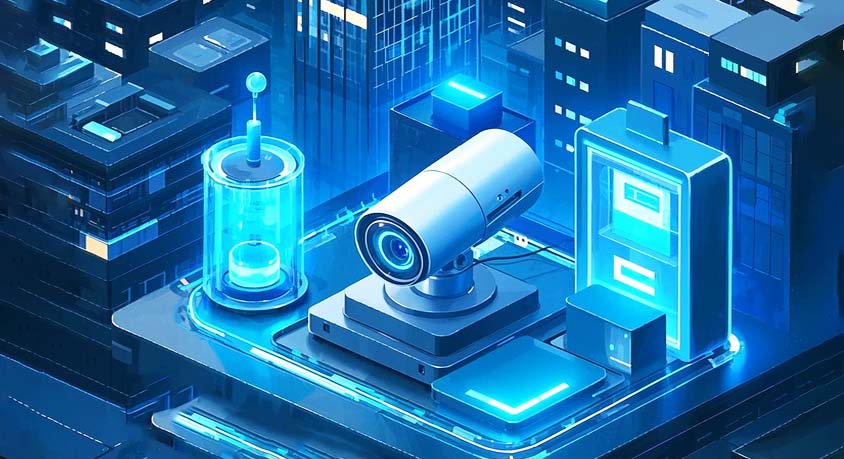
Technologically, this is the difference between a sentry with eyes and a sentry with a brain. Standard cameras provide raw visual data; your brain must process it. On-device AI acts as a pre-processing filter. Think of it as a highly trained security dog that only barks at specific scents—in this case, the digital "scent" of a person kneeling to grab a box, not a person walking a dog past your yard. The camera's chip runs a compact neural network trained to recognize human forms, postures, and common objects like packages or delivery trucks, making split-second classifications without needing to send video to the cloud first, which enhances speed and privacy.
The economic rationale is clear. Beyond the direct cost of stolen goods, consider the time tax of dealing with claims, customer service, and reshipping. A system that reduces successful thefts through deterrence and instant awareness pays for itself. Furthermore, some insurance providers offer discounts for verified, proactive security systems. The ROI is calculated in recovered merchandise, saved time, and potential premium reductions.
Implementation is a three-phase setup focused on rules, not just installation. Phase 1: Strategic Placement. Install the camera with a clear, head-on view of the delivery zone, minimizing blind spots. Phase 2: AI Training & Rule Setting. Use the app to label frequent, harmless events (like your regular mail carrier) to improve the AI's accuracy. Then, create automation rules: "If a delivery is detected, record for 5 minutes and send me an alert. If an unknown person is detected near the delivery zone within 30 minutes of a delivery, sound the indoor alarm and start continuous recording." Phase 3: Integration. Connect the camera to other smart devices—a smart lock to allow verified courier access to a secure box, or smart lights to flood the porch with light during a suspicious event.
This system represents the next evolution of home security: contextual awareness. It understands the difference between a threat and a routine event. Your role shifts from a constant monitor of feeds to a manager of a mostly autonomous system. You are notified only when a defined risk pattern emerges.
To evaluate it, run a simple test. For one week, note all the false alerts from your current camera or doorbell. Then, configure the G5 Pro with basic person/package detection. The reduction in irrelevant notifications is the immediate, tangible benefit. The long-term value is the creation of a documented, intelligent layer of defense for your property's most vulnerable point. Stop watching your porch. Start programming a guardian for it.